
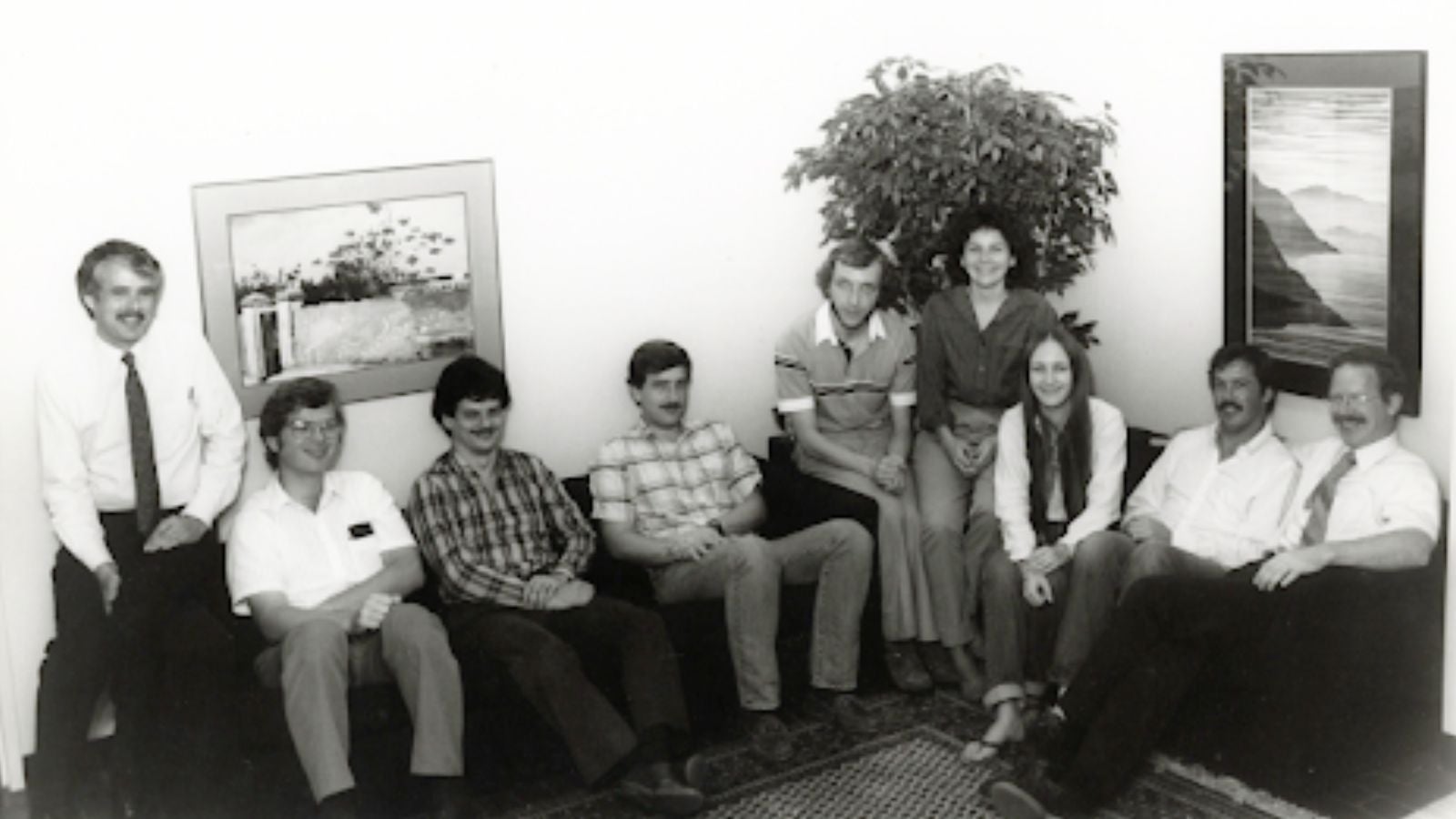
As the Rice University Department of Computer Science enters its fifth decade, it stands as an engine of innovation and the largest academic program on campus. The department’s journey has been defined by its ability to navigate the transition from the nascent computing landscape of the 1980s to the current era of global connectivity and Artificial Intelligence. This article will look back at the department’s history, exploring its creation and the leadership that has guided its evolution into a globally recognized center for research and education.
The Path to an Independent Department
The history of computer science at Rice began long before the department was a standalone unit. In 1968, Rice formed the Department of Mathematical Sciences to manage applied mathematics, operations research, statistics, and computer science. By the late 1970s and early 1980s, computer science was an emerging discipline technically housed within Mathematical Sciences but also closely associated with the Electrical Engineering (EE) department. This organizational structure became increasingly difficult to maintain as computer science grew in complexity and student demand.
There was a clear professional need for a dedicated unit because the Mathematical Sciences department was responsible for too many diverse areas, making it difficult to give computer science the specialized focus it required. Furthermore, students were beginning to demand an identity of their own; they wanted diplomas that explicitly stated “Computer Science” to reflect their specific expertise rather than the broader “Mathematical Sciences” designation. Ken Kennedy (‘67), a Rice alumnus who had returned as a faculty member, and Richard Tapia, then chair of Mathematical Sciences, recognized that for computer science to flourish, it needed its own faculty positions and administrative autonomy.
Early 1980s: Rice CS Takes Shape
The pressure to formalize the discipline reached a turning point in the early 1980s. To bolster the university's computer science efforts, Corky Cartwright was recruited from Cornell University in 1980 to join Kennedy. Together, they became the intellectual core of the effort to establish a standalone department. Under Rice President Norman Hackerman, the Department of Computer Science was officially founded in the spring of 1984. The founding allowed both Mathematical Sciences and the new Computer Science department to secure their own faculty positions and flourish independently. The department started out small with only five or six faculty members. This included Kennedy, Cartwright, Willie Zwanepoel, Hans Boehm, and Scott Warren. Despite its size, the department immediately aimed for elite status, recruiting aggressively against established institutions like Berkeley and MIT.
It was at this time that the Department of Electrical Engineering was renamed to be Electrical and Computer Engineering (ECE).
The Mid to Late 1980s: Putting Rice CS on the Map
During its first decade, Rice Computer Science established a global reputation for excellence in Programming Languages (PL) and Compilers. This focus was so dominant that a common joke on campus was that "CS" actually stood for "Compiler Science." Key players during this era included faculty member Matthias Felleisen, a "force of nature" hired in 1987 who helped expand Rice CS’ reputation beyond compilers to the theory and implementation of languages. Felleisen and Cartwright formed a research "power couple," producing groundbreaking work in programming-language theory.
The student experience in the 1980s was defined by the physical realities of early computing. Before personal computers were ubiquitous, students used allocated pools of CPU time known as "funny money" to run programs on an IBM 370 mainframe in the basement of Herman Brown Hall. Alum Katherine McKinley (BA CS, 1985; MS CS, 1990; PhD CS, 1992) recalls students handing over punch cards and waiting for printouts to see if their logic was correct. A single typo could mean waiting an hour to see the error. During this period, current CS faculty member Dave Johnson (‘82, MS ‘85, PhD ‘90) was among the early student cohorts. He arrived as a freshman in 1978 and eventually became the first PhD student of Willie Zwanepoel, who built the department's systems group.
Ken Kennedy: The Architect of Rice Computer Science (Chair: 1984-1992)
According to Tapia, Ken Kennedy (‘67) was universally considered the "father of the department," and he notes that Kennedy "worked very, very hard” to create a department that would flourish. As the founding chair, and a Rice graduate himself, Kennedy set the standard for research excellence and high-performance computing. Under his watch, the department grew from a few faculty members to a nationally ranked unit in the top 20, despite its small size.
Kennedy was described as a leader who "called all the shots" but remained a nurturing mentor who helped integrate new faculty. His student mentorship was equally impactful; he advised a significant number of female PhD students at a time when they were significantly underrepresented in the field. This included Mary Hall (‘85, PhD ‘91), Kathryn McKinley (‘84, MS ‘90, PhD ‘92), and Linda Torczon (‘80, MS ‘84, PhD ‘85).
Kennedy’s influence also extended to the highest levels of national policy; he was well-known on the national stage, serving on committees such as the President’s Information Technology Advisory Committee (PITAC), which advised President Bill Clinton.
CITI and the Ken Kennedy Institute
In 1986, Ken Kennedy founded the Rice Computer and Information Technology Institute (CITI). The Rice institute was established to break down departmental "silos" and create a space where researchers from across campus could collaborate on IT initiatives. ECE faculty member Don Johnson served as the institute’s first executive director, a role Kennedy asked him to take specifically because Johnson was an electrical engineer, providing an appearance of breadth to the unit. The institute became a hub for large-scale grant writing and interdisciplinary research. Following Kennedy's death in 2007, the institute was renamed in his honor and continues to serve as a hub for computing innovation and responsible AI at Rice.
Defining the Academic Vision
While Kennedy handled high-level politics, Corky Cartwright was the master of the "airtight white paper." Recruited from Cornell, Cartwright brought a deep understanding of world-class computer science curriculum. He was instrumental in shaping the undergraduate major, creating tracks that pointed students toward elite PhD programs.
Cartwright was known for his rigorous approach and his signature style—appearing in class in shorts regardless of the occasion. Along with Felleisen, he pioneered an introductory curriculum based on the Scheme language, which emphasized deep mathematical concepts over mere coding. "We got to the point where I think we actually had the best undergraduate program in the country in terms of teaching software engineering and programming languages," Cartwright recalled. His course, "Principles of Programming Languages" (COMP 411), remained a cornerstone of the curriculum for decades.
Cartwright went on to serve the university for 45 years until his retirement in 2025.
The Center for Research in Parallel Computation (CRPC)
In 1989, the department landed its most significant early success: the Center for Research in Parallel Computation (CRPC). This was one of the first Science and Technology Centers (STC) funded by the National Science Foundation (NSF), awarding Rice $50 million over ten years. The proposal was a "David versus Goliath" victory, beating out 495 other institutions to make Rice the hub of a multi-institutional consortium that included Caltech and Los Alamos.
The CRPC’s success directly led to the construction of Duncan Hall. President George Rupp had pledged a new building to house the initiative if Rice won the grant, telling the NSF site visit panel he would build it "with no hesitation." To make room for the new facility, Rice demolished the physics research lab known as the Bonner Lab, marking the first time the university had ever demolished a building rather than renovating it. Designed by British architect John Outram, Duncan Hall’s interior features a celebrated decorative ceiling titled "The Night Sky."
--------------------------------------------------------------------------------
A Legacy of Leadership: The Chairs Who Have Shaped the Department
The Department of Computer Science has been guided by a succession of leaders who each addressed the unique challenges of their respective eras, always maintaining teaching as a core part of the mission.
Ken Kennedy (1984–1992)
As the founding chair, Kennedy set the standard for research excellence and high-performance computing. Under his watch, the department grew from a few faculty members to a nationally ranked unit in the top 20, despite its small size.
Robert "Corky" Cartwright (Interim: 1989–1990)
In 1989, Kennedy took a sabbatical, and Cartwright stepped in as the department’s second chair. While he was a primary intellectual driver of the curriculum, his time as chair was a bridging period. During this time, Cartwright was handed the department with no specific outside mandates, choosing to focus on maintaining high academic standards and preserving the "old Rice DNA"—a tight-knit community with a collective mind meld regarding the department's vision.
John Dennis (Acting: 1992–1994)
Ken Kennedy stepped down as chair in 1992 primarily to focus on his burgeoning research career and leadership of the CRPC. His departure was a period of significant transition. The school then turned to John Dennis, former chair of mathematical sciences. Dennis was brought in from outside the department to provide a "steady hand" and professionalize operations.
Dennis accepted a two-year term with the specific charge of conducting a global search for a permanent successor. Although not a computer scientist, he proved to be a critical mentor to junior faculty and played a key role in recruiting Moshe Vardi, a high-caliber researcher from IBM.
Then–Dean of Engineering Michael Carroll described the recruitment as landing a “big fish with very light tackle,” capturing both his excitement and surprise at securing such a prominent scholar. Dennis later recalled that he and Carroll were “like two schoolboys” when they realized Vardi was a potential candidate for the position.
Moshe Vardi (1994–2002)
When Vardi arrived from IBM, he noted that the department’s previous attempts to make decisions such as hiring, through unanimity, created a risk of paralysis. He immediately sought to replace the culture of vetoes and deadlock with democratic majority rule, insisting that the department must keep moving forward even when consensus was elusive. This new approach helped to stabilize the department and prevented any single faculty member from having a veto.
He also sought to broaden the department’s expertise by hiring the first female faculty members in AI and robotics, notably Devika Subramanian and Lydia Kavraki.
Vardi considers one of his most significant academic accomplishments converting the Computer Science degree from a Bachelor of Arts to a Bachelor of Science. This allowed for a more rigorous 80-hour curriculum. He advocated for this shift because the previous 60-hour limit for a BA was no longer sufficient for the increasingly deep body of knowledge required for the major. This move also required convincing the university to decouple the Bachelor of Science designation from its traditional requirement for formal engineering accreditation.
Vardi’s tenure coincided with the 1990s dot-com boom, a period he described as “heady times” when both the internet and enrollment in computer science exploded. Alumnus Gaurav Banga (PhD ‘99) recalls giving a talk on the internet in 1996 that went "viral" on campus, with standing room only as the community clamored to understand the new technology.
In 2001, Vardi was asked by then-Dean of Engineering Sydney Burrus to take over the directorship of CITI. Vardi agreed but explicitly told the dean he could not do a good job if he had to manage both the department and the institute simultaneously, stating he did not want to "wear too many hats." He served in both roles for approximately one year before concluding it was "just too much for one person to do." He encouraged new Rice CS leadership, believing it was healthy to introduce "fresh ideas."
After stepping down, Vardi remained director of CITI for 19 years. In recent years, he’s become a national leader in the ethics of computing, advocating for Rice to require ethics coursework for all its students.
Keith Cooper (2002–2008)
A former student of Ken Kennedy, Keith Cooper (‘78, MA ‘80, PhD ‘83) served two terms as chair. During his tenure, he successfully negotiated to expand the faculty from 14 members to 19, creating positions "out of thin air" to keep researchers like John Mellor-Crummey at Rice. Cooper is also widely known for co-authoring the globally influential textbook Engineering a Compiler with Linda Torczon, which helped keep Rice’s name at the forefront of the field.
Cooper navigated the department through the 2001–2002 dot-com bust, which ushered in the "doldrums of computer science" where enrollment plummeted to as few as nine graduating seniors. Despite this, the faculty continued to excel, and in 2007, graduate programs in computer science and electrical engineering were ranked number one in the nation for faculty scholarly productivity. This ranking was based on the 2007 Faculty Scholarly Productivity Index, which analyzed metrics like research grants, publications, and citations.
Joe Warren (2008–2013)
Professor Joe Warren (‘83, PhD ’86) chaired the department during the financial fallout of the 2008 stock market crash. To offset budget cuts, he focused on expanding the Professional Master’s (MCS) program, which grew from five students to 50 a year to provide discretionary revenue. Warren oversaw a pivotal curriculum shift in 2009, moving the introductory language from Scheme to Python to make computer science more accessible. This change helped the major explode in popularity. Introductory CS course COMP 140, at its peak, reached between 400 and 500 students, which he estimated to be roughly 10% to 15% of the entire student body.
Warren also co-developed one of the first Massive Open Online Courses (MOOCs) on Coursera with Professor Scott Rixner, bringing global attention to Rice’s teaching.
Vivek Sarkar (2013–2017)
Vivek Sarkar’s tenure as chair was a period defined by significant growth and a deliberate effort to strengthen the departmental community. Undergraduate enrollments doubled in just three years, and Sarkar served as a vocal champion for diversity, overseeing a significant increase in female undergraduate majors from 23% to 35%. He leveraged revenue from the rapidly expanding professional master's programs to create a dedicated fund for summer research internships. These internships allowed students from underrepresented groups to discover the field early by working with faculty following their freshman year.
As part of his goal to strengthen community and break down silos, he established regular "all-hands meetings" in the Duncan Hall auditorium. This allowed students, faculty, and staff to better understand their respective roles and activities.
Shortly after becoming chair in July 2013, he also encouraged the graduate students to form the Rice CS Graduate Student Association (CSGSA) to foster a more vibrant and unified social atmosphere. The CS professional master’s programs grew significantly under his oversight, eventually reaching enrollment numbers that approached those of the university's MBA programs.
Luay Nakhleh (2017–2020)
Luay Nakhleh, who later became the Dean of Engineering and Computing, focused on addressing a decade of stagnation in faculty size. He successfully secured a formal, written pledge from the university administration to significantly increase the department's size, leading to the recruitment of more than 15 new faculty members.
Recognizing that PhD students are the "engine of research," he prioritized revitalizing graduate student energy by hosting candid town hall meetings to address their concerns and improve their academic trajectory.
Nakhleh spearheaded the creation of the online Master of Computer Science (MCS) program in 2019, which proved to be a critical "win" that enabled the department to pivot quickly and effectively when the COVID-19 pandemic hit just a year later. This prior experience with online education allowed seasoned faculty to mentor their colleagues on digital tools, putting the department "ahead of the game" during the crisis. He also instituted a systematic approach to alumni outreach, leading tours to major tech hubs.
Deeply passionate about teaching, Nakhleh connected with freshmen by revealing that his own undergraduate GPA was a 3.2. He used this personal history to urge students not to be "too harsh on themselves" and to focus on deep learning rather than solely chasing a 4.0.
As dean, he recently oversaw the renaming of the school to the George R. Brown School of Engineering and Computing, reflecting the central role computing now plays across every discipline.
Christopher Jermaine (2021–Present)
Current chair Christopher Jermaine has led the department through the post-pandemic era, expanding the teaching faculty to accommodate surging enrollments and launching a new AI major that positions Rice at the forefront of a technological shift comparable to the rise of the internet.
He also oversaw the growth of the Master of Data Science program, which began as a partnership with Chevron and has since expanded significantly.
The department has also navigated volatility in the tech industry. Pandemic overhiring followed by widespread layoffs created a challenging job market, particularly for international master’s students whose visa status depends on employment. Undergraduate enrollments have dipped modestly amid industry uncertainty and questions about AI’s impact on software careers.
Strengthening industry partnerships remains a priority. Despite Houston’s concentration of Fortune 500 energy companies, Rice computer science has historically had stronger ties to West Coast tech firms than to local industry. Jermaine sees AI as a potential catalyst for deeper engagement with Houston companies, particularly through innovation hubs such as the Ion and collaborations in energy, health care, and materials science. Jermaine describes this period as a “golden age” for the department’s research breadth and impact.
Looking ahead, the department faces strategic questions about scale and competitiveness. Remaining a top-tier research program in AI requires continued faculty growth and significant computing infrastructure investment — potentially millions of dollars annually in GPUs or expanded cloud partnerships. At the same time, computing is becoming deeply embedded across disciplines, increasing both opportunities and coordination challenges as expertise spreads beyond traditional departmental lines.
Forty Years of Excellence
From the early battles over departmental identity to the launch of an AI-centric future, Rice Computer Science has remained a tight-knit, collaborative community where teaching is a central mission. As it moves into its fifth decade, the department continues to define itself through a blend of academic rigor and a relentless focus on solving society's most complex problems.